

Drumming, Relaxation & Movement
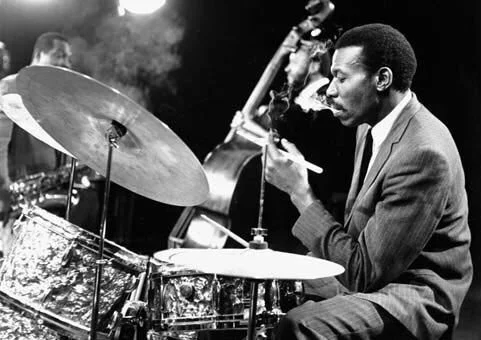
As well as working in the rehab industry, I also enjoy an array of hobbies and activities outside of work, one of which is drumming.
I’ve been learning to drum for just over a year now (although I took a small hiatus for several months trying to find a teacher I gelled with) and aside from slightly improving my ability to produce tolerable sounds, I’ve also learned a lot about rehab and about life.
One such lesson was taught to me by my teacher last week whilst I was working on a double stroke roll, when he said “if you want to go faster, you have to relax more”.
I instantly smiled and rolled my shoulders to ease the tension that had come over my body whilst concentrating and trying to learn a new skill that I was finding difficult. The shoulder roll was for my body, but the smile was for my mind, as I instantly recognised my own teachings to clients I work with on a daily basis whilst trying to help them improve their movement, get out of pain, or rehab an injury.
It might sound counterintuitive, but in clinic I find myself coaching people to “relax more” to move better, just as much if not more than coaching them to create more tension. Counterintuitive because a lot of you may be thinking that movement equals effort, and effort equals tension. This is a logical deduction given that from a simple observational standpoint, when you watch someone move, most of what you see is muscles contracting to create movement.
And this is true - muscles do indeed contract to create movement. However in order for a muscle to contract, it first has to relax. The more relaxed it is, the more potential is has to contract and produce force. This is why one of the most common coaching cues within elite sprinting is to “run fast, stay loose”, as coined by Lloyd ‘Bud’ Winter, one of the most successful track and field coaches in history.
To help you understand this more clearly, I want you to do an experiment for me - extend your thumb into the classic “thumbs up” position. This movement/position is called ‘thumb extension’. Now, with your thumb already extended, I want you to extend your thumb. You can’t…because it’s already there. You can’t extend your thumb if it’s already extended. You might have been able to get a little bit of extra movement into even more extension, but the movement will have been tiny.
This illustrates the concept perfectly: it’s hard to do something you’ve already done.
It’s true that muscles need to contract to create movement, but it’s difficult to contract a muscle if it’s already contracted. David Grey, an Irish rehab coach, put it nicely back in 2024 at his lower limb workshop in London. Walking to the corner of the room he said “if I want to walk to the corner of the room, but I’m already standing in the corner of the room, I can’t do it. I’ve got no space to complete the task I’m trying to complete because I’m already here. In order to be successful, I first need to walk away from where I’m trying to go, to create the space I need, so that I can now walk to the corner of the room.”
One of the biggest barriers I see everyday for those trying to improve their movement or get out of pain is a lack of an ability to switch muscles off when they’re not actively working, just as much as a difficulty with switching them on when they need to. When you’re holding on to a lot of tension by default, it becomes difficult to create the tension you need to move efficiently. That’s why I find myself coaching people to “relax more to move better” in nearly every session I do.
Once you’ve learned to let go of unnecessary tension, you can then learn how and when to produce tension that’s meaningful. Moments of tension that move you efficiently and are specific to what you’re trying to achieve, rather than constantly limiting you and holding you back. Movement is not just about producing force, it’s about learning to orientate those forces in the right directions, and at the right times. A constant dance between contract:relax, on:off, stop:go. Again, to draw lessons from elite sprinting, “muscle tension does not make you run fast, loose muscles that fire at precisely the right moment make you run fast”, says Mark Tosques.
Unfortunately, this is much easier said than done. As I found out during my drumming lesson last week, our bodies' natural response when learning something new, especially if you’re finding it difficult (which all rehab should be) is often to create general muscle stiffness as a protective response; a metaphorical handbrake that holds you back in order to keep you safe. This is especially true when trying to re-learn how to move after injury, years of chronic pain, or whilst dealing with a neurological condition. You then end up with a body that’s fighting itself against the very thing that it needs most - change: new patterns, new positions, new options…
Many traditional approaches misinterpret this situation and commit one of the cardinal sins of rehab - they fight tension with tension. They tell people to work harder, get stronger, and contract more forcefully to move better. The end result is often much like your thumbs up experiment, you might squeeze a little bit of improvement out of this approach, but it’s the equivalent of David Grey trying to walk to the corner of the room whilst already standing there, and repeatedly banging his head into the wall.
The solution is instead exactly as my drum teacher proposed - “if you want to go faster, you have to relax more”, and if your goal is to move better, reduce pain or improve performance, you must get as good at letting go of tension as you are at creating it.