

The Butterfly Effect: A Systems Approach to Rehab
One of the biggest mistakes I see in rehab is an overemphasis on the problematic area. Treating the body as a set of isolated cogs that you can remove, fix, and put back into place so that the engine can run smoothly again. This belief, largely coming from an outdated philosophy of science founded on Newtonian physics and Cartesianism, is outdated and harmful to productive physical rehabilitation - creating a population of patients who believe that they’re a car, speaking to physios, chiros, and osteos alike who are telling them that they’re a mechanic.
The reality is that your body is a complex system. An interconnected fabric of dynamic interactions that must be trained accordingly.
Dr Perry Nickleston says, “No part of the body ever works alone, never gets injured alone, and never heals alone”, which perfectly highlights where many rehab approaches go wrong. So many clients that I work with have tried physio before, whether that be neurological or musculoskeletal, and the story is so often the same…
“I have foot drop and got given some ankle exercises but they didn’t work”
“I have wrist pain and they gave me some wrist exercises but they didn’t work”
“I had knee surgery and strengthened my leg but get re-injured when I return back to sport”
Treating the body in isolation might lead to improvements in your ability to use that area in isolation (if done well which is also often not done), but not necessarily to use that area as part of the complex system required for functional movement. Nobody with foot drop wants to be able to lift their foot up again - they want to be able to walk independently again without tripping over. Those are two vastly different goals that require vastly different training approaches and rehab plans.
You must teach the brain how to integrate whatever movement you’re training back into the system, otherwise your results will be sub-par.
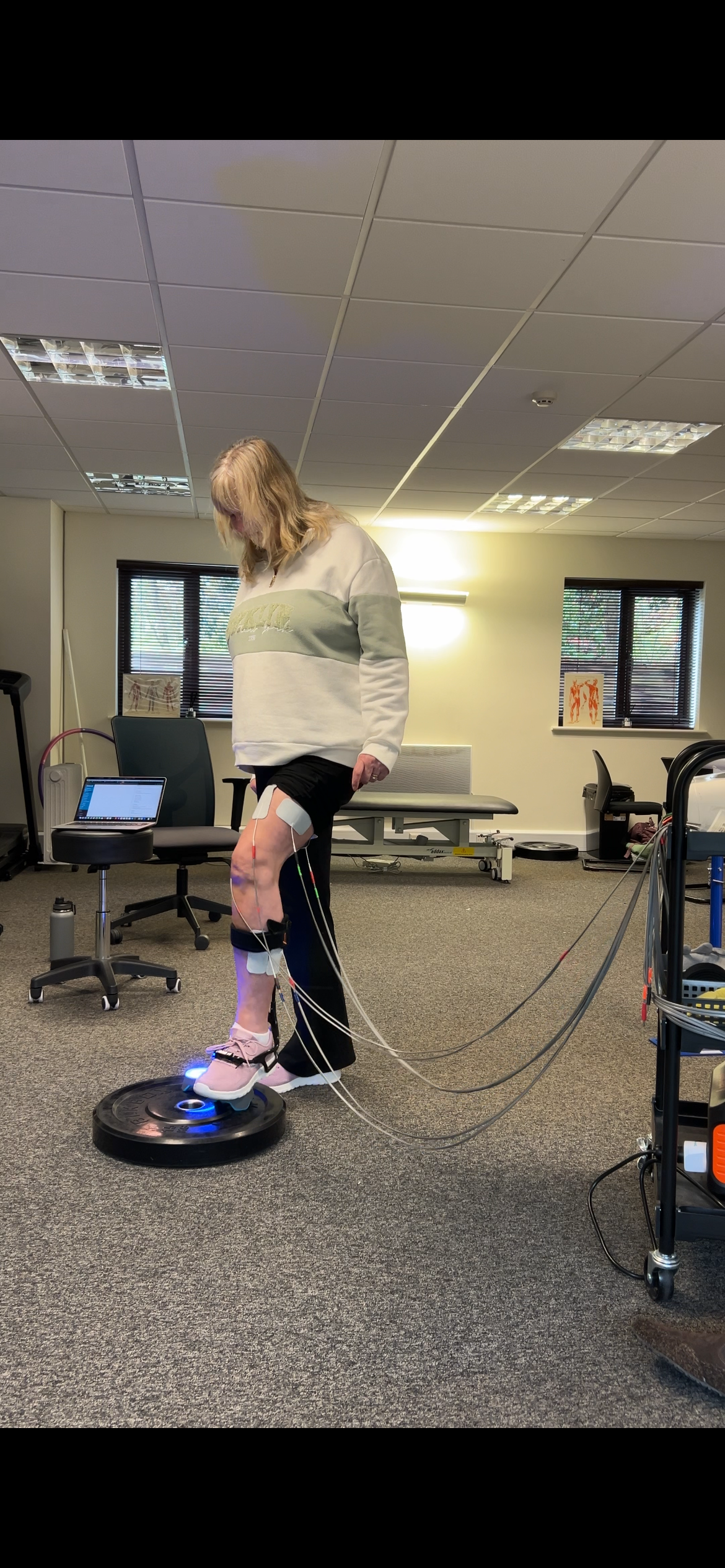
Here’s a picture of one of my foot drop clients performing some gait drills where the focus is not just on lifting the foot, but how the foot interacts with the rest of the leg and body during the gait cycle. We’re also using the Neubie’s direct current to stimulate the entire leg, facilitating systemic neurological connection and communication.
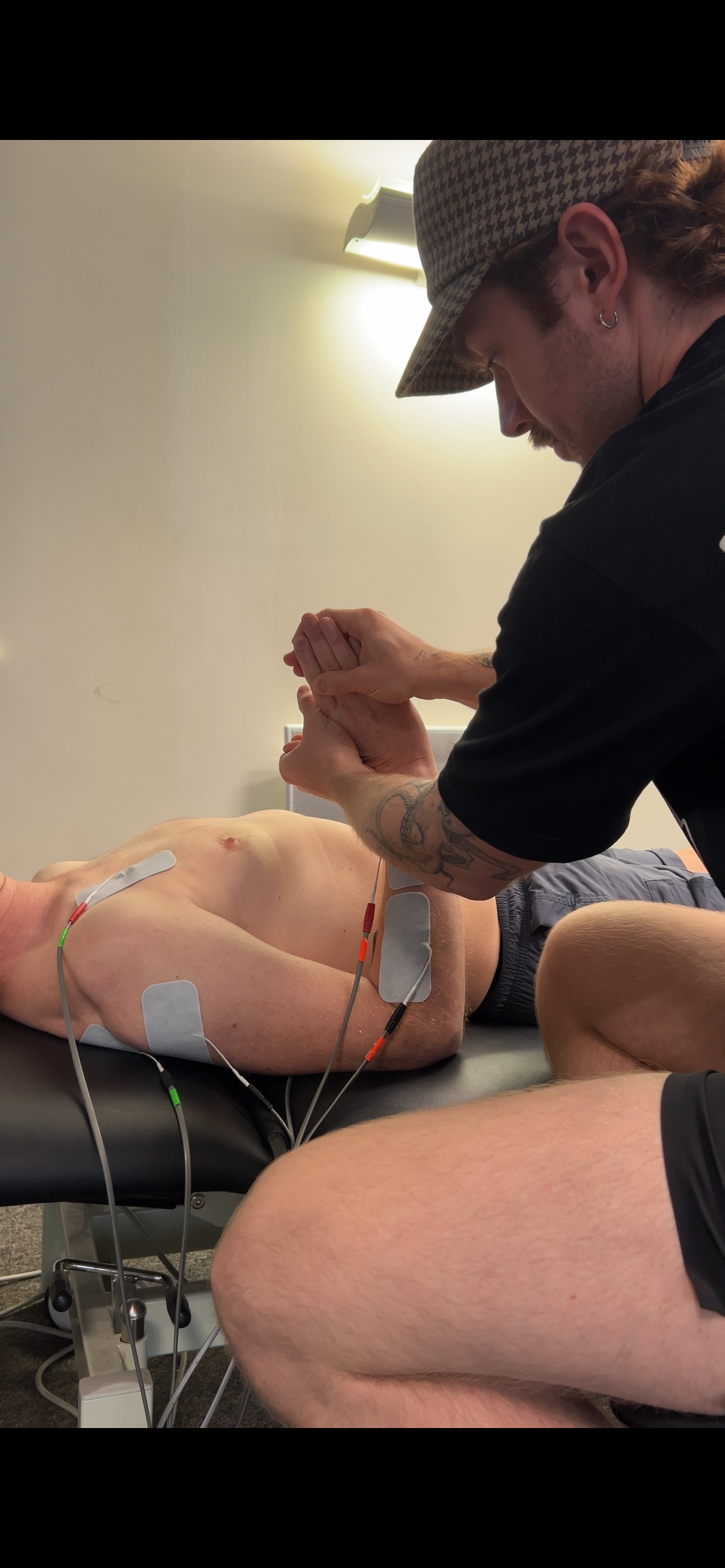
Here’s another picture of a stroke client of mine re-learning how to extend his wrist and fingers whilst we also stimulate the rest of his arm.
An issue with one part of the body is never just an issue with that specific part - it’s a system issue that requires a system based solution. Chaos theory states that when a butterfly flutters its wings in one part of the world, it can cause a tornado in another, which has largely been misunderstood in popular culture to mean that small events can cause big ones. However, in science what it really implies is that small changes can lead to unpredictable systemic shifts.
And so, when you’re trying to get out of pain or improve how a certain part of your body moves, consider how the winds of change may in fact come from lands elsewhere.